| LEARN: Animals Food Humane Farming? Environment Conscience SHARE: Family & Friends Screenings Classrooms SUPPORT: Overview Films & Programs New Languages Teachers Culture-Builders |
| LEARN: Animals Food Humane Farming? Environment Conscience SHARE: Family & Friends Screenings Classrooms SUPPORT: Overview Films & Programs New Languages Teachers Culture-Builders |
On the surface, one might be tempted to dismiss the idea of humans having prejudices about other animals. But if someone says offhandedly that pigs are gluttonous and dirty, or that chickens are stupid and fearful, how many of us would be the least bit concerned or upset, or feel compelled to speak out and challenge these statements? How many of us would pause to consider the emotional lives, familial bonds, intelligence, and personalities of these animals whose fate it is to be so vulnerable, at the complete mercy of human whims? Can we actually see them as individuals, or are we predisposed to see them in our minds as a generic set of exaggerated species-specific characteristics, like those of a cartoon figure in a children's book? Can we comprehend how this serves to make the displacement, control, exploitation and killing of animals, not to mention our own participation in these tragedies, more acceptable?
Throughout history, the systematic exploitation of others has almost always been accompanied by prejudicial and derogatory beliefs about the nature of those being dominated, used or killed, beliefs that make these abuses seem "right" or "necessary" or "natural." Once we begin to view fellow beings who happen belong to another group as savage or stupid or lazy or dirty or uncivilized or unpredictable or existing purely for the purpose of fulfilling our wants and needs, then controlling them, driving them from their homes, enslaving them and even ending their lives can become accepted as part of society's norms, particularly when derogatory characterizations are repeated over and over by those in positions of authority or influence. Such damaging stereotypes can gain an aura of objectivity when paired with some obvious physical, cultural or linguistic differences. Characteristics such as skin color, language, gender and even species become the identifying focal point to which the prejudice is attached.
When exploitation is being carried out, or a life is about to be taken, the common human tendency is to focus on what makes "us" different from "them." The enormous number of commonalities we share with those whom our actions and choices harm tends to vanish from our consciousness. In that moment, we attempt to suppress undeniable truths: that we all seek health and safety and freedom from pain, that we all fear sickness and death, and that we all value our own lives and seek happiness.
The simple act of making a good faith effort to learn more about the true nature of those being systematically exploited or harmed can be the first step toward having one of the deepest and most inspiring human experiences: overcoming a prejudice and becoming more mindful of all we have in common with our fellow beings who share this earth. Our prejudices not only make it easier for us to participate in, or benefit from the exploitation of others, or to stand by while they are being harmed, they also rob us of all we might learn from others, and all the joy we might know in appreciating their beauty. When we allow prejudice to dictate our behavior, it is not only hurtful to others, but it also diminishes our own peace of mind. When we free ourselves to view others in a way that is not defined by preconceived notions, but rather, by curiosity, open-mindedness, empathy and appreciation of the individual, there is often a deep feeling of relief and a new sense of connection.
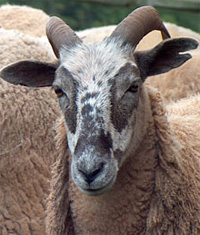
How might things change if more of us made a conscious effort to see animals as individuals? What if we were to see convincing evidence that a mother hen, if allowed to, can show a remarkable range of nurturing behaviors toward her chick? Would we begin to question the morality of bringing billions of chickens into existence only to take their lives when it suits our purposes? Would beautiful photos of a male deer who cared for an orphaned fawn encourage us to question the morality of putting a bullet or arrow through the heart of such beautiful creatures? How might our own hearts be transformed, if we were to learn of an unlikely friendship between a man and a gorilla or between a cat and a bird? Would we open ourselves to the possibility that every bird and every deer, every cat and every gorilla, is an individual, and that just like human individuals, their personalities and life histories make them capable of all kinds of amazing and unexpected behaviors? This is the promise of the Peaceable Practice of learning to see animals as individuals.
Copyright © 2016 Tribe of Heart Ltd.
Peaceable Practices
Learn to see animals as individuals
Connect with animals
Adopt an animal-free diet
Rescue animals
Advocate for animals
Preserve, protect and restore animal habitats
Meet Some Sanctuary Animals
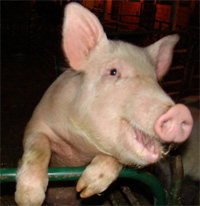 Residents of Maple Farm Sanctuary
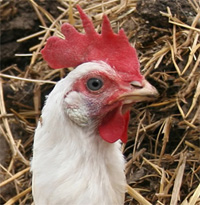 Residents of Peaceful Prairie Sanctuary
 Residents of Poplar Spring Animal Sanctuary